Blog

blog cover image iot

Benefits of Using CoEnsure as a Process Management System for IoT Networks

CoEnsure is a powerful process management system that brings significant advantages to IoT (Internet of Things) networks by coordinating device activities, optimizing workflows, ensuring security, and integrating with existing business systems. Here are the key benefits of using CoEnsure in various IoT applications:

1. Enhanced Data Collection and Analysis

CoEnsure streamlines the collection, storage, and analysis of data from IoT devices, providing a structured approach to managing vast data flows from diverse environments. This ensures real-time analysis and facilitates better decision-making.

  • Real-Time Monitoring: CoEnsure enables organizations to monitor IoT devices and data in real time, which is crucial for applications requiring immediate responses, such as industrial automation and smart city management.
  • Data Integration and Processing: It integrates various data streams (e.g., temperature, humidity, motion) into a unified platform, simplifying analysis and enhancing insights, making it ideal for diverse environments like manufacturing or smart homes.

2. Improved Automation and Workflow Management

By defining and managing workflows, CoEnsure automates tasks based on data inputs from IoT devices, ensuring efficient operation and response.

  • Trigger-Based Automation: CoEnsure uses data from IoT devices to automatically trigger specific actions, such as shutting down a machine that is overheating and alerting maintenance personnel, enhancing safety and reducing downtime.
  • Workflow Optimization: It helps optimize workflows by analysing performance data, identifying bottlenecks, and improving efficiency in processes like supply chain management, leading to optimized delivery routes and reduced fuel consumption.

3. Scalability and Flexibility

CoEnsure offers the scalability and flexibility needed to handle growing IoT networks and increasing data volumes, making it suitable for expanding businesses and evolving technology landscapes.

  • Dynamic Scaling: Designed to scale dynamically, CoEnsure can accommodate additional data and devices as IoT networks expand, which is particularly beneficial in environments like smart cities or large industrial complexes.
  • Flexible Integration: CoEnsure integrates seamlessly with various IoT devices and platforms, allowing businesses to customize and evolve their IoT ecosystems as technology and requirements change, providing long-term adaptability.

4. Enhanced Security and Compliance

CoEnsure strengthens the security of IoT networks by enforcing robust security protocols and ensuring compliance with regulatory standards, protecting against data breaches and unauthorized access.

  • Data Security: It implements data encryption, access controls, and monitoring to safeguard sensitive information transmitted between IoT devices and central systems, ensuring only authorized access.
  • Compliance Monitoring: CoEnsure maintains detailed logs, generates compliance reports, and monitors for breaches, helping industries meet regulatory standards regarding data collection, storage, and usage.

5. Predictive Maintenance and Increased Reliability

CoEnsure utilizes IoT data to enable predictive maintenance, anticipating equipment failures and scheduling maintenance activities proactively, which reduces downtime and maintenance costs.

  • Predictive Analytics: By analysing IoT sensor data, CoEnsure can predict equipment failures, allowing for proactive maintenance and reducing operational disruptions.
  • Reliability Management: It monitors the performance and health of IoT devices, triggering alerts for malfunctions or calibration needs, ensuring consistent performance and reliability across the network.

6. Enhanced Decision-Making Capabilities

CoEnsure’s integration of IoT data with business processes significantly enhances decision-making, providing a comprehensive view of operations and enabling data-driven insights.

  • Data-Driven Insights: It aggregates and analyses data from various IoT devices, guiding strategic decisions such as optimizing store layouts or product placements in retail settings.
  • Operational Dashboards: CoEnsure provides real-time visibility into key performance indicators (KPIs) and critical metrics, allowing managers to quickly assess and respond to the state of operations.

7. Seamless Integration with Other Systems

CoEnsure ensures smooth communication and data flow between IoT devices and existing business systems such as ERP, CRM, and SCM, facilitating unified operations and cross-functional coordination.

  • Unified Operations: By integrating IoT data with business applications, CoEnsure creates a holistic view of operations from physical environments to decision-making processes, maintaining coherence and efficiency.
  • Cross-Functional Coordination: It ensures IoT data is accessible to all relevant departments, enabling seamless coordination, such as automatically reordering supplies in a manufacturing setting based on real-time inventory data.

8. Promoting Sustainability and Resource Management

CoEnsure helps organizations achieve sustainability goals by optimizing resource usage based on IoT data, leading to more efficient energy use, waste reduction, and better resource allocation.

  • Energy Management: It uses IoT data to adjust systems like heating, cooling, and lighting in real-time, minimizing energy use while maintaining comfort, especially in smart buildings.
  • Waste Reduction: CoEnsure analyses data from IoT sensors to identify and reduce waste, enhancing sustainability efforts in industries such as manufacturing.

9. Support for a Wide Range of IoT Applications

CoEnsure is versatile, providing value across various IoT applications, including smart homes, wearable technology, industrial IoT, smart cities, healthcare, connected vehicles, smart retail, energy management, supply chain, and logistics.

  • Adaptable Across Industries: CoEnsure’s ability to manage and optimize IoT devices in different sectors showcases its flexibility and broad applicability, making it an ideal solution for companies looking to enhance their IoT capabilities.

Conclusion

Using CoEnsure as a process management system offers numerous benefits, including improved data analysis, automation, scalability, security, predictive maintenance, decision-making, integration, and sustainability. These advantages help organizations fully leverage the potential of IoT networks, driving efficiency, innovation, and strategic decision-making across industries.

Ideal Target Market for CoEnsure

  1. Industries with Complex IoT Networks:

    • Manufacturing and Industrial Automation: Organizations using a range of IoT devices to monitor machinery, automate processes, and optimize workflows will benefit from CoEnsure’s ability to provide real-time data analysis, predictive maintenance, and workflow management. Companies in this sector often require scalable solutions to manage large-scale IoT deployments and ensure consistent device performance.
    • Smart Cities and Municipalities: Cities deploying IoT solutions for traffic management, waste management, environmental monitoring, and public safety can utilize CoEnsure to integrate diverse IoT data streams into a unified platform, enabling better decision-making, resource optimization, and real-time monitoring.
    • Healthcare Providers and Facilities: Hospitals and clinics using IoT devices for remote patient monitoring, connected medical devices, and health data collection can leverage CoEnsure for improved data security, compliance monitoring, and workflow automation, enhancing patient care and operational efficiency.

  2. Organizations Prioritizing Security and Compliance:

    • Financial Services (Banking, Insurance, Fintech): These sectors need robust security and compliance frameworks to manage sensitive financial data collected via IoT devices like ATMs, point-of-sale systems, and mobile devices. CoEnsure’s capabilities in data encryption, access control, and compliance monitoring make it a suitable choice.
    • Utilities and Energy Management Companies: Firms managing smart grids, smart meters, and energy distribution systems can use CoEnsure to enhance data security, ensure regulatory compliance, and optimize resource management for energy efficiency and sustainability.

  3. Businesses Focusing on Operational Efficiency and Cost Reduction:

    • Insurance Claim Management: Companies or individuals working in the Insurance industry can utilise CoEnsure as a process management system to carefully ensure claims are completed timeously and effectively, manage autonomous communication, and monitor for discrepancies with relation to individual client policies.
    • Logistics and Supply Chain Management: Companies that rely on IoT for asset tracking, fleet management, and inventory monitoring can use CoEnsure to streamline operations, reduce costs, and optimize supply chain workflows through real-time data integration and analysis.
    • Retail Chains and E-commerce Platforms: Retailers using IoT for customer behaviour analysis, automated checkout, and inventory management will find CoEnsure valuable for its ability to enhance data-driven insights, automate routine tasks, and optimize in-store and online operations.

  4. Companies Investing in Sustainability and Resource Optimization:

    • Environmental and Sustainability-Focused Organizations: Companies aiming to reduce their carbon footprint and optimize resource use (such as energy and water) can benefit from CoEnsure’s capabilities in monitoring and optimizing IoT-enabled systems, like smart building management and precision agriculture.

  5. Large Enterprises with Extensive IoT Ecosystems:

    • Tech and Telecommunications Firms: These companies often manage vast IoT networks, including consumer devices (like smart home products) and enterprise solutions. CoEnsure’s scalability, flexibility, and integration capabilities make it an ideal fit for managing diverse and complex IoT environments.
    • Automotive Industry: Car manufacturers and companies developing connected and autonomous vehicles can use CoEnsure to manage telematics data, optimize vehicle performance, and enhance safety features through integrated IoT management.

Characteristics of the Ideal Target Market:

  • Size and Scale: Medium to large enterprises with extensive IoT deployments and complex workflows.
  • High Data Volume: Organizations that generate and rely on large amounts of data from various IoT devices for operational decision-making.
  • Focus on Security and Compliance: Companies in regulated industries that prioritize data security and compliance with legal standards.
  • Commitment to Innovation: Businesses that are early adopters of new technologies and continually seek to improve operational efficiency, customer experience, and sustainability practices.
  • Need for Flexibility and Scalability: Companies that require solutions capable of scaling with growing IoT networks and adapting to evolving technological needs.

By targeting these segments, CoEnsure can effectively address the unique challenges and needs of businesses that rely heavily on IoT technologies to enhance their operations, security, and sustainability efforts.



post cover image

The Importance of AI and Process Automation for Future Businesses

As businesses continue to evolve in an increasingly digital world, automation technologies like Artificial Intelligence (AI), Machine Learning (ML), and Robotic Process Automation (RPA) are becoming essential tools for organizations seeking to remain competitive and efficient. These technologies are revolutionizing the way companies operate by automating routine tasks, optimizing processes, and enabling employees to focus on higher-value work. In this article, we will explore the impact of these technologies on businesses today and discuss future trends that will shape the landscape of process automation.

Automation Technologies: AI, ML, and RPA

AI, ML, and RPA are at the forefront of the digital transformation sweeping across industries. These technologies are not just buzzwords but critical tools that are reshaping how businesses operate.

  • AI refers to the simulation of human intelligence processes by machines, particularly computer systems. It enables machines to perform tasks that typically require human intelligence, such as decision-making, problem-solving, and natural language understanding.
  • ML, a subset of AI, focuses on the development of algorithms that allow computers to learn from and make predictions or decisions based on data.
  • RPA involves the use of software robots to automate repetitive, rule-based tasks that were once performed by human workers.

By automating mundane and repetitive tasks, these technologies free up employees to concentrate on more strategic and creative aspects of their jobs, which can lead to increased job satisfaction and productivity. For instance, in a customer service environment, AI-driven chatbots can handle a large volume of routine inquiries, allowing human agents to focus on more complex customer issues that require a personal touch.

Digital Business Automation (DBA)

Digital Business Automation (DBA) is a comprehensive approach that leverages AI-driven process discovery tools to identify optimal areas for automation. DBA goes beyond simple task automation; it involves rethinking and redesigning entire business processes to achieve greater efficiency and effectiveness.

AI-driven process discovery tools can analyze vast amounts of data to uncover bottlenecks, inefficiencies, and opportunities for improvement. This level of insight allows businesses to strategically implement automation where it will have the most significant impact, ensuring that resources are used effectively and that the organization is well-positioned for continual growth and improvement.

By integrating AI, ML, and RPA into a cohesive DBA strategy, companies can create a more agile, responsive, and competitive business model. As a result, they can adapt more quickly to market changes, customer needs, and technological advancements.

2023 Trends in Automation

The year 2023 saw significant advancements and trends in automation that have set the stage for future developments.

  1. Increased RPA Usage: There was a notable increase in the adoption of RPA across various industries. This surge can be attributed to the technology’s ability to help companies optimize time management by automating repetitive tasks, thus allowing employees to focus on more strategic initiatives. For example, in the finance sector, RPA is used to automate processes such as data entry, compliance reporting, and invoice processing, significantly reducing the time and effort required for these activities.
  2. Low-Code/No-Code Tools: The rise of low-code and no-code tools made it easier for businesses without extensive technical expertise to implement automation solutions. These platforms allow users to create applications and automate processes using intuitive visual interfaces, thereby democratizing access to automation technologies and accelerating digital transformation efforts.
  3. Sustainability and Security: In 2023, businesses began to incorporate sustainability and advanced data security measures into their automation efforts. As companies became more aware of their environmental impact, they started using AI and automation to optimize energy usage, reduce waste, and support sustainable practices. Additionally, with the increasing prevalence of cyber threats, organizations focused on enhancing their security protocols through automated monitoring and response systems.
  4. Industry Impact: The banking, finance, and insurance industries were particularly active in adopting automation technologies. These sectors have traditionally been data-intensive and are characterized by a high volume of repetitive tasks, making them ideal candidates for automation. By automating processes such as loan approvals, claims processing, and customer service, these industries have been able to improve efficiency, reduce costs, and enhance customer satisfaction.

2024 Projections for Automation

Looking ahead to 2024, several key projections indicate that automation will continue to grow in importance and impact.

  1. More Accessible Automation: The user interfaces for automation tools are expected to become more user-friendly, enabling broader adoption across different industries and organizational sizes. This increased accessibility will allow even small and medium-sized enterprises (SMEs) to leverage automation technologies to improve their operations.
  2. Advanced Process Discovery: AI advancements will enhance process discovery capabilities, helping companies more accurately identify areas for automation. This will allow businesses to automate not just individual tasks but entire workflows, resulting in more comprehensive and impactful digital transformation.
  3. Improved AI Customer Service: AI-driven customer service solutions, such as chatbots and virtual assistants, will continue to evolve and improve. These technologies will become more adept at understanding and responding to customer needs, providing a more personalized and efficient customer experience.
  4. IoT Integration: As the Internet of Things (IoT) continues to expand, DBA will increasingly integrate with IoT devices to enhance operational efficiency and reduce the need for human intervention. For instance, in manufacturing, IoT sensors can provide real-time data on equipment performance, allowing AI-driven systems to predict maintenance needs and automate repairs, thereby minimizing downtime.
  5. Greater Security: With cyber threats becoming more sophisticated, advanced AI and ML algorithms will be crucial in boosting automated cybersecurity efforts. These technologies will enable businesses to detect and respond to threats in real-time, protecting sensitive data and maintaining customer trust.
  6. Widespread Adoption: While DBA has already made significant inroads into industries such as banking and finance, 2024 will see its expansion into new sectors like healthcare, government, defence, retail, and manufacturing. Each of these industries has unique needs and challenges that can benefit from automation, whether it’s through enhancing patient care in healthcare, improving public service delivery in government, or streamlining supply chain management in retail.
  7. Sustainability and Ethics: As automation technologies become more pervasive, there will be a growing focus on ensuring responsible and ethical AI implementation. Companies will need to ensure transparency in their AI algorithms and comply with regulations that protect consumer privacy and data security. Additionally, businesses will be expected to demonstrate how their automation efforts contribute to sustainability goals, such as reducing carbon footprints or minimizing waste.
  8. New Skills for Employees: As automation becomes more integrated into business operations, employees will need to develop new skills to work effectively with DBA systems. This will include not only technical skills related to AI and automation technologies but also soft skills such as critical thinking, problem-solving, and adaptability.

Conclusion

The integration of AI, ML, and RPA into business processes is more than a trend—it is a fundamental shift in how companies operate and compete in the digital age. By embracing these technologies and investing in digital business automation, organizations can achieve greater efficiency, improve customer experiences, and position themselves for sustained growth and innovation. As we move into 2024 and beyond, the businesses that thrive will be those that leverage automation not just as a tool, but as a core component of their strategy for future success.


Household Insurance Automation South Africa

The household insurance market in South Africa would benefit from a solution that could automate the claims process through STP (Straight Through Processing). Straight through processing is simply a term that means from initiation right through to payment with ZERO human intervention needed.

This article looks at how the CoEnsure system helps an insurance company reduce manual intervention, enabling accurate and on-time payment to the service provider and homeowner.

CoEnsure is a holistic system designed specifically for the insurance and property management industries to provide accurate and efficient costing, a fully integrated calendar and a diary for service providers to accurately keep track of their appointments.

Allowing the Insurers to have an overview of each calendar to track job status, an online assessing app that can allow even a homeowner to perform their own claim. The CoEnsure automated insurance system also coordinates the necessary workflow for the specific service providers.

CoEnsure also uses the calendar and diary features to automatically communicate assessment and job times to the homeowner on behalf of the service providers to ensure everyone is constantly informed. This insurance system can also provide quotations based on pre-determined rates decided by the insurer.

On the homeowner’s household claim, CoEnsure can also provide an extensive insurance report that can be instantly submitted with the automatic quote before the assessor has even left the homeowner’s property. Super simple, super fast.

Let us compare the old insurance system with the insurance system of the future.

Home Insurance Automated System

Home_Flood_Water_Insurance

The new way of processing household insurance claims is now hassle-free. The insurer will know exactly how far along a claim is, and be able to receive monthly, weekly or daily reports on previous claims that have been processed. These reports are custom and tailored to your specific needs.

Want to find out more about CoEnsure follow the link Or if you want to make contact with our team to set up a meeting.

How does this automated home insurance system help out the service provider?

Step 1.) The homeowner logs an insurance claim. A burst geyser for example.

Step 2.) The CoEnsure system connects that claim through an API to the relevant service providers, on the insurer’s panel that is situated in the area of the claim.

Step 3.) The service provider appoints an assessor through the CoEnsure system to assess the geyser damage.

Step 4.) The Assessor will do the full assessment on the CoEnsure system using the online app. This app has been designed to higher industry assessing standards to help guide an assessor through the following disciplines of an assessment – Building, Plumbing, Electrical and Flooring. This means it’s possible to only need one assessor on a claim.

With the help of A.I. The CoEnsure system guides the assessor through the different disciplines of the insurance claim. Once the claim details are all filled in, a complete and comprehensive report including pictures of the damage is compiled on-site to be sent instantly to the Service Providers relevant to the claim.

Step 5.) The claim report is received by the relevant service providers for the specific disciplines to audit the claim and edit where they see fit.

N.B all prices are pre-set by the insurer and are not adjustable by the service provider.

Whenever a quotation has been edited there is a historical timeline as to who edited it and what they had changed. This is for auditing purposes, you will have access to a full audit trail.

Step 6.) The quotations are all compiled into a single report and sent to the insurer for approval. Once approved the relevant service providers can order the parts and book installation times with the homeowner managed through the CoEnsure system.

Step 7.) Once the work is complete the homeowner will be able to rate the experience with the different service providers and if they are satisfied with the work the payments may be released.

The CoEnsure system provides reports based on the insurer’s service providers such as the highest rated service provider, what materials they mainly use – this is fully customisable for the insurer.

Benefits Of Property Insurance & Automation

Fire_Damage_Insurance_Roof_Home

Piece of mind knowing your assets are safe no matter what the circumstances. In those tough circumstances know that you are protected in a single quick and efficient process with CoEnsure.

Know exactly what place the claim process is at and how long it will take for the job to be complete. No matter what the circumstances are on the property insurance claim you will only need to deal with one assessor allowing for smooth and clean communications.

Knowing with CoEnsures homeowners module you as the homeowner can do your own insurance assessment no matter the time. The homeowner’s module guides you through every step of an insurance assessment and compiles it into a standard report for the insurer to approve.

For more information on CoEnsure’s homeowner insurance assessment module please follow the link.

Summarising The CoEnsure Insurance System Steps

Our automated insurance system can do a full assessment and provide a report with a quotation to order stock for the job based on the approved quotation all on the same day.

With complete claims, our system can provide vital custom data reports for the insurance broker to send through to the insurer such as discovery insurance group, Hippo insurance, Santam insurance, basically all insurance companies. This can be automated to a daily, weekly or monthly process.

Client satisfaction is of utmost importance, SMS notifications are sent through to the client reminding them of assessor appointments, clients are encouraged to rate service providers supplying key feedback information.

Homeowners are screened through the CoEnsure A.I. system for fraud detection and are flagged and given a rating out of 100% for the insurer to investigate before the claim process has even begun.

For more information on artificial intelligence, ethics follow this link.

With the CoEnsure assessor’s module, only a single assessor is required to assess the damage saving money on assessment fees and streamlining the process for the homeowner and insurer.

Concluding Household Insurance in South Africa

Flooding_Home_Damage_Cars_Storm_Damage

Dealing with hundreds of thousand claims a month requires a dedicated staff load and a large amount of capital. CoEnsure has designed an automated household insurance system to help the insurance industry cope with this great demand.

Through integrating our straight-through insurance processing with a built-in artificial intelligence structure we can assure 100% accurate insurance assessments done by the homeowner or assessor.

To help get your company up to speed our dedicated team has put together a simple training module designed for quick seamless integration with the CoEnsure system.


Home Owners Module

Leaking pipe in the middle of the night… You wake up to water gushing under your bed. As you place your foot on the ground a shiver strikes through your body as you step on your wet carpet.

You switch off the water mains and deal with the excess water throughout your home. Now you have to wait… Wait for an assessor to be appointed to see the extent of the damage. Wait for the report to be approved by the insurer. Wait for the parts to be ordered and wait for the installation to be complete.

What is the homeowners’ module? How does this insurance assessment platform work?

using the homeowners’ module. You can complete the insurance assessment yourself when it happens. With the help of built-in A.I our self-assessing platform will guide you through the assessment process through all disciplines such as ceilings, plumbing, electrical, flooring and painting.

Once you have completed your own insurance assessment the report will automatically be sent to your insurer for approval of the claim.

In the backend of the homeowners’ assessment module, a quotation is made up and sent to the insurance approved service providers. allowing the required materials to be ordered.

You would have selected a preferred date and time for the service providers to replace and fix the damage in your home. Streamlining the whole insurance claim.


Service Providers Module

SP Assessors Module
Welcome to your own personal Service Provider Assessors Module! The goal of this module is to make you feel confident in all your digital assessments with CoEnsure. This module consists of 5 steps that have been carefully thought out for you as an assessor. We trust this module will prepare you for the future of the insurance industry.

Accepting claim
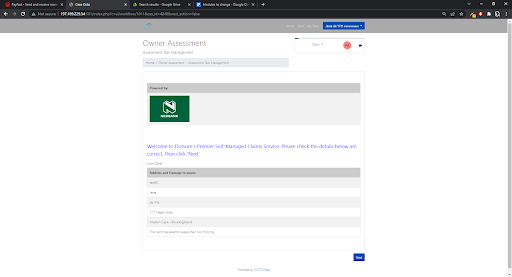
The process of accepting a claim begins with you being appointed to a claim. Once you have been appointed on a claim you will receive a personalized SMS with a link. To accept or decline the claim, you will

  1. Open the SMS
  2. Click on the link in the SMS.
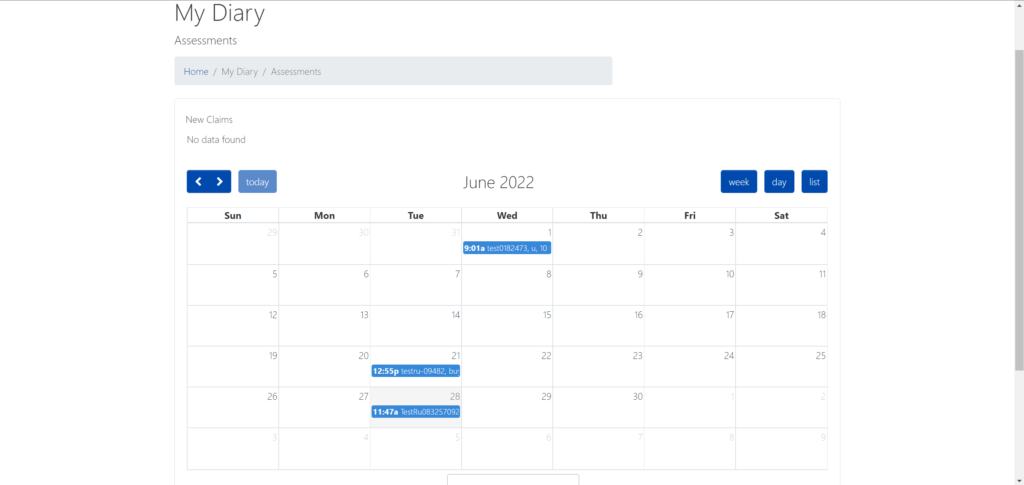
    The link will take you to your CoEnsure login page, you will then log in using your CoEnsure details and proceed to your personal diary. Above the calendar will be a list of your claims, with the most recent/new claim at the bottom of that list. Select and open the claim to view the details of the claim. Once opened either accept or decline the claim.

Your next step: Setting an appointment for an accepted claim

Setting an appointment for an accepted claim
After accepting a claim, customer details will become available for you to contact them. Contact the customer using the contact details provided to decide on an assessment date.
Once the date has been decided, log the date and time into your personal appointment date dropbox. Now that the date and time have been selected you can click confirm at the bottom of the page. You will then see a pop-up notification confirming your set appointment.

Your next step: Accessing the set appointment

Accessing the set appointment
On the day of the appointment or prior to the appointment you may want to access the appointment. To access the appointment, you can either

  1. Click on the old SMS link and login or
  2. Use your browser to log in to CoEnsure.
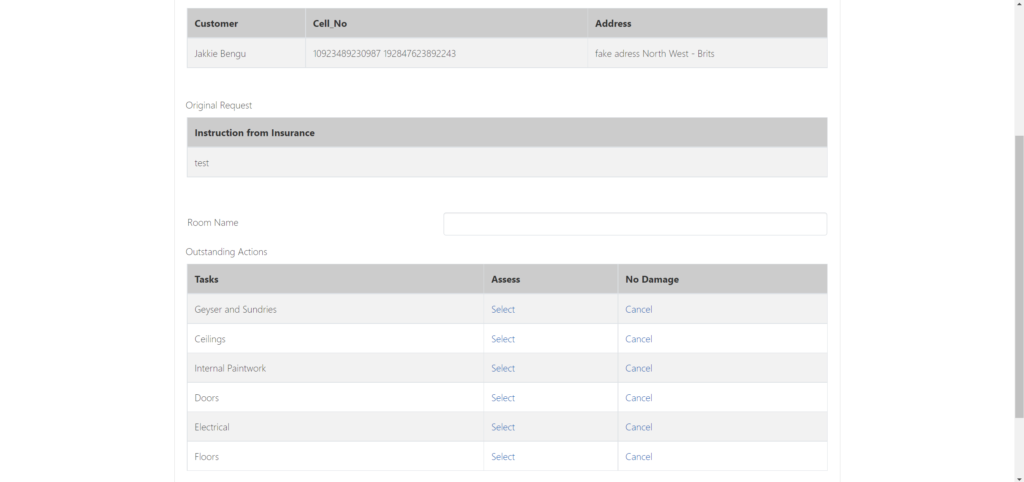
    Once you have logged in, open your personal CoEnsure diary. Scroll down to your calendar, you will be able to adjust your view from monthly to list, and you will be able to see all of your set appointments. Click on the appointment you would like to access, and you will be able to see all customer details from the address to the cellphone number.

Your next step: Starting an assessment.

Starting an assessment
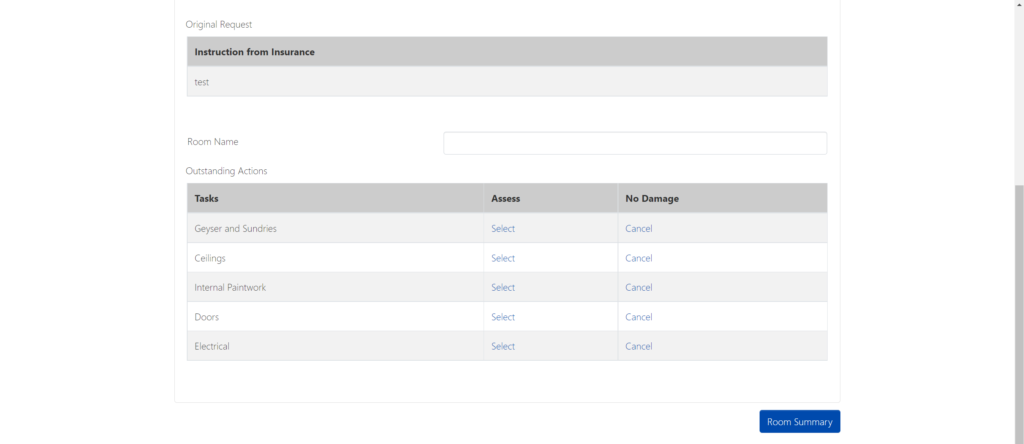
To start an assessment, access the claim through your personal CoEnsure diary (Accessing the set appointment). Once you have opened the appointment, scroll past the customer details, and enter the name of the room you are assessing into the box. From there you can select one of the outstanding tasks to complete.

Your final step: Outstanding tasks

Outstanding tasks
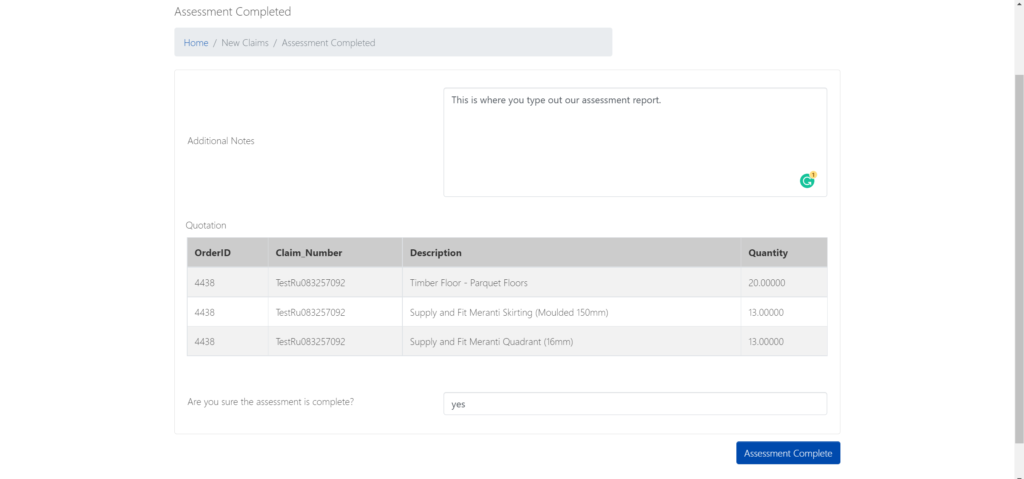
The outstanding tasks list is a breakdown of the different disciplines that you will need to assess in accordance with the claim. Simply work through each task by following the instructions for each discipline. If there is no damage to a specific discipline, select the no damage button and the discipline will be removed.
Complete the outstanding task list and you would have successfully completed a claim.

Congratulations!

You have completed your Service Provider Assessors Module and are ready for your digital assessments.
If at any time you feel you need a reminder on this process, please do not hesitate to refer back to this module.